WebP Data Extractor

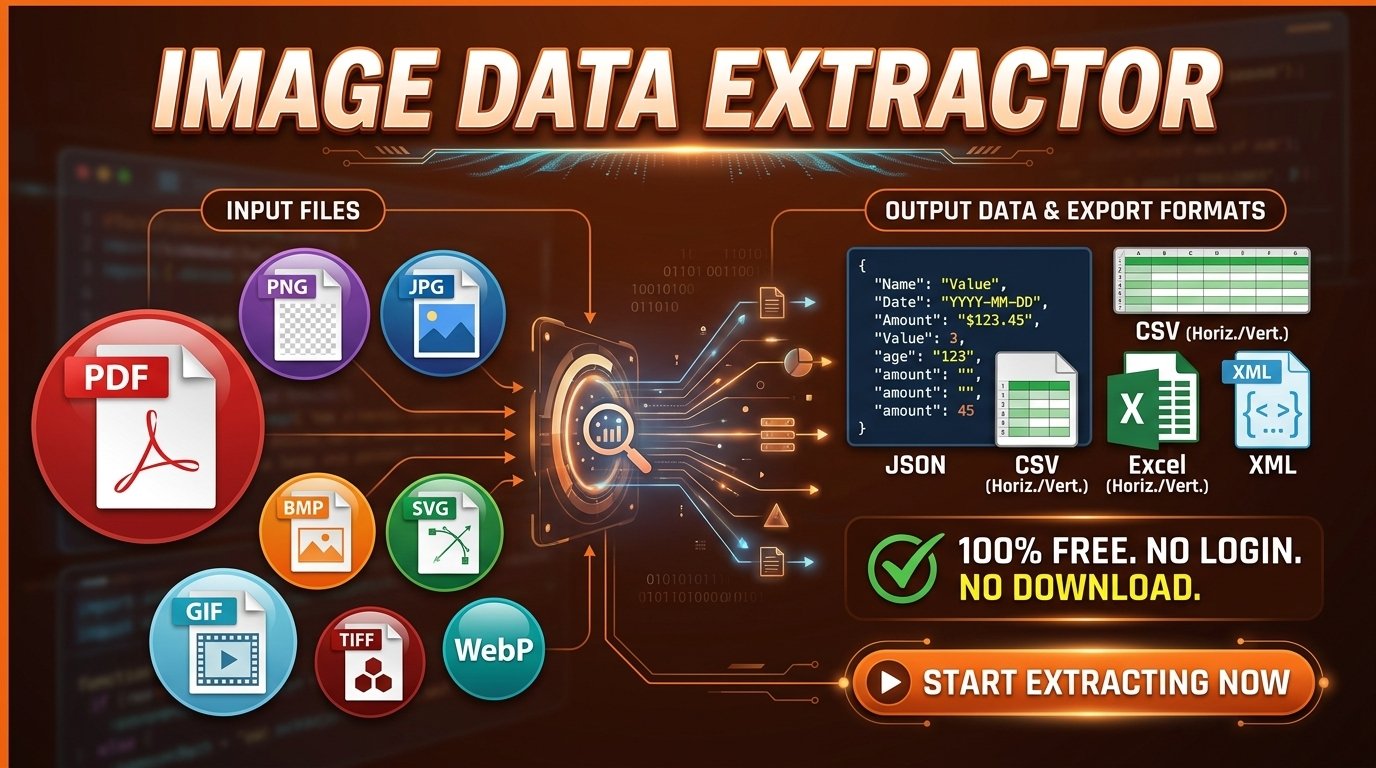
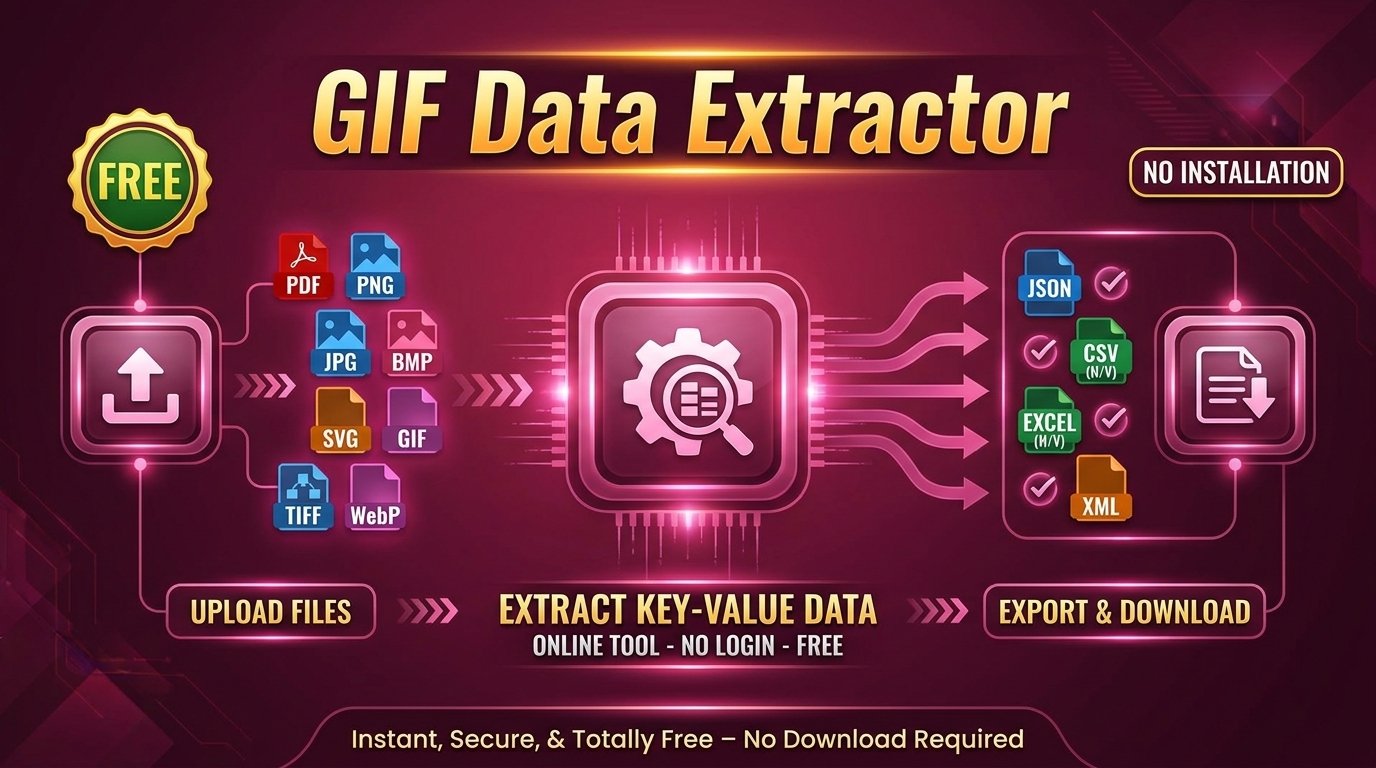
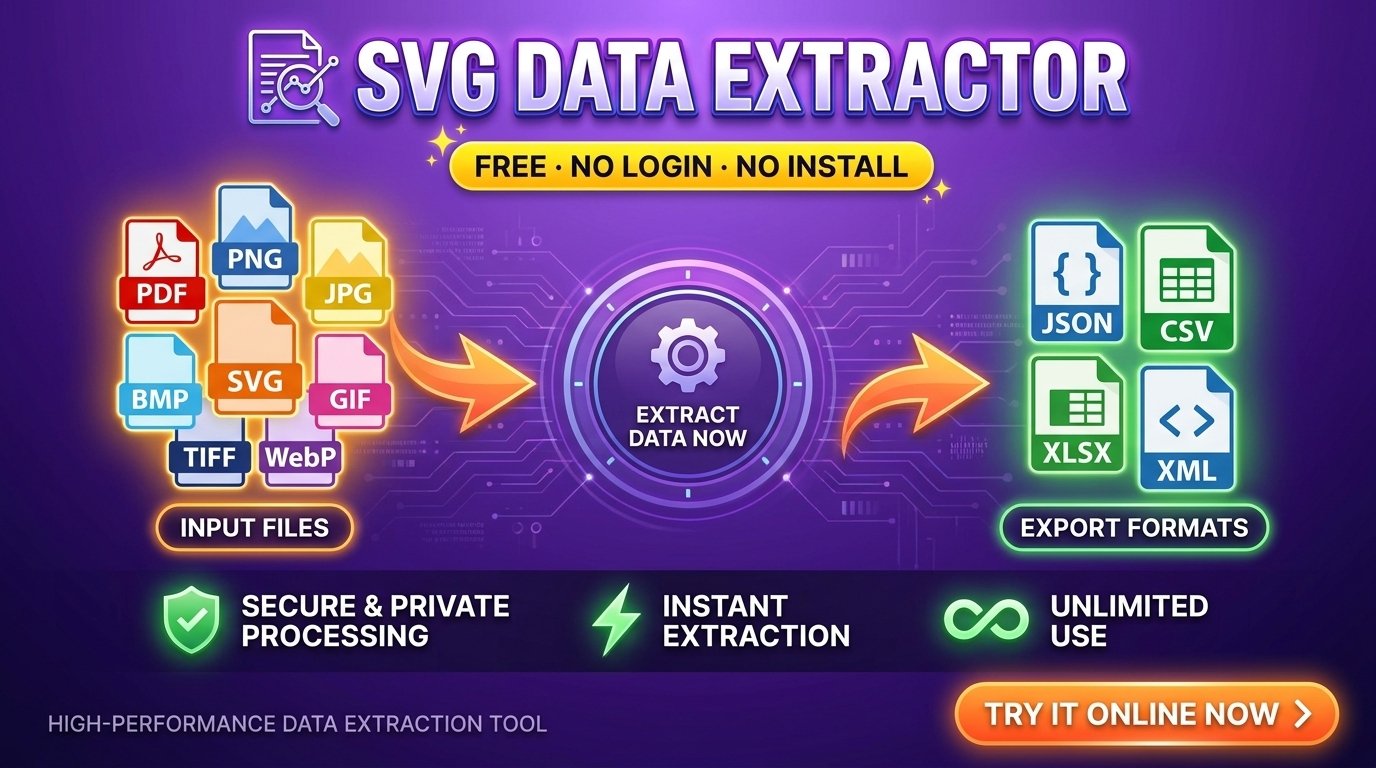
Turn any WebP image into clean key-value data in seconds — web forms, ID cards, invoices, receipts, product spec images, and dashboard screenshots saved or exported as WebP. Let AI pair every label with its value, or define your own fields to lock the same schema across files. Export to JSON, CSV (horizontal or vertical), Excel, or XML. Free, no signup, no install, 20 languages. PNG, JPG, PDF, TIFF, GIF, BMP, and SVG welcome too.

No Signup
Secure & Private
Lightning Fast
PNG JPG PDF TIFF SVG WebP GIF BMP

Drag & Drop Your WebP

or click to browse

WebP, PNG, JPG, TIFF, GIF, BMP, SVG, PDF

Max 50 MB

Powerful Features for WebP Extraction

Everything you need to read a WebP image, tidy up the fields that come back, and export them in the shape your systems expect.

WebP & All-Format Support

Built for WebP — Google's modern web image format — with every other format covered too: PNG, JPG, TIFF, GIF, BMP, SVG, and PDF. Drop in a lossy or lossless WebP form, badge, or product shot and pull its data without converting anything first.

AI Field-and-Value Detection

The extractor reads your WebP and maps every label to the value next to it — form entries, ID lines, invoice totals, spec rows — with no template to build and nothing to configure.

Define Your Own Fields

Know the fields you need? Spell out your own keys — Full Name, ID No., Invoice No., Issue Date — attach an optional description to each for sharper matches, and every WebP you run comes back in that exact shape.

Live WebP Preview

See your WebP rendered — transparency and all — before you process it. A WebP is read in a single pass; multi-page formats like PDF, GIF, and TIFF add page-by-page navigation so you extract from exactly the right page.

Editable Results & Templates

Every field lands in a table you can change — fix a value, rename a key, add anything the AI missed, or delete a row. Happy with the layout? Save it as a result template and reuse it on the next WebP.

Flexible Export Formats

Download as JSON for code and APIs, CSV in horizontal or vertical layout for spreadsheets, Excel (.xlsx) either way for analysts, or XML to feed the systems that expect it.

How It Works

Take a WebP image from upload to structured, exportable data in three simple steps — nothing to install or configure.

1

Upload & Preview

Drag and drop your WebP or pick it from your device, and it renders in the preview — transparency included. A WebP is read in a single pass; multi-page files like PDF, GIF, and TIFF show page or frame controls so you can choose the one to read.

2

Choose Mode & Verify

Let Automatic mode find and pair every label and value for you, or switch to Manual and name the fields you expect — Full Name, ID No., Invoice No., Issue Date. Answer the quick security check and extraction begins.

3

Review & Export

Your data appears in an editable grid — fix any value, add anything missing, drop rows you don't need — then download as JSON, XML, CSV, or Excel in the layout you prefer.

Use Cases for WebP Data Extraction

WebP is the web's everyday image format — where forms, cards, receipts, and product shots end up online. See how those labeled layouts turn into clean, structured key-value data.

Web Forms & Online Applications

Pull field labels and the values filled in against them from registration, intake, application, and survey forms captured or saved as WebP.

ID Cards, Badges & Passes

Capture full name, ID or employee number, role, department, and issue or expiry dates from WebP ID cards, membership badges, and access passes.

Invoices, Receipts & Billing Statements

Read vendor, invoice or receipt number, line items, subtotals, taxes, totals, and dates from invoices, receipts, and statements downloaded or screenshotted as WebP.

Product Listings & Spec Sheets

Lift product name, SKU, price, dimensions, materials, and key specs from e-commerce product images and datasheets — where WebP is the everyday format.

Dashboard & Portal Screenshots

Turn WebP screenshots of analytics dashboards, admin portals, and reports into key-value data — metric labels and their numbers, statuses, and dates.

Medical & Lab Records

Extract patient name, test or result labels, values and units, reference ranges, and dates from lab reports, prescriptions, and intake sheets saved as WebP.

Certificates & Credentials

Lift recipient name, course or credential title, certificate ID, issue date, and issuing body from certificates, diplomas, and award designs saved as WebP.

Shipping Labels, Tickets & QR Tags

Capture tracking or reference numbers, addresses, dates, seat or order details, and the text beside QR and barcodes from WebP labels, tickets, and tags.

Frequently Asked Questions

Got questions? We've got answers.

What kinds of WebP images can I extract data from?

Any WebP that shows labeled information — web forms, ID cards, invoices, receipts, certificates, product images, and dashboard screenshots, plus lab records, tickets, and shipping labels. Wherever a label sits next to a value, the tool can pull the pair.

What data does the extractor actually pull from a WebP?

It returns key-value pairs from the image — field names and entries, ID and reference numbers, dates, names, prices, totals, and any other labeled text — ready to export as JSON, CSV, Excel, or XML.

How does automatic extraction work on a WebP?

Pick Automatic mode and the tool reads your WebP, then links each label to its value on its own — no field map, no template. It's the fastest route for a one-off image or an unfamiliar layout.

When should I define my own fields instead?

Choose Manual mode for layouts you process again and again — a standard application, a recurring invoice, a fixed ID template. Name the keys yourself (Full Name, ID No., Invoice No.) and add an optional hint to each so every file comes back with the same fields in the same order.

Does WebP's lossy or lossless compression affect accuracy?

WebP keeps text sharp in both modes, and the extractor reads either one. Lossless or high-quality lossy WebP gives the cleanest results; very heavily compressed images with soft, blocky text can lower accuracy — anything you can read clearly, the tool can read too.

Can I extract data from a WebP screenshot?

Yes — screenshots are one of the most common WebP sources. Capture a web form, dashboard, portal, or receipt as WebP and the tool pulls the labeled values straight from the image.

Does it handle transparent or animated WebP?

Transparency is no problem — the image is read as shown. An animated WebP is processed as a single still frame; for true frame-by-frame selection, use a GIF or TIFF, which offer frame controls.

Can I reuse the same fields across many WebP files?

Yes. Build your keys in Manual mode and download them as a JSON or CSV template, then upload that template the next time a matching WebP comes in to recreate the fields instantly. You can also export the current fields whenever you want a backup.

Can I fix the results before downloading?

Every extracted row is editable — overwrite a value, rename a key, add a field the AI skipped, or remove one you don't need. What you confirm in the table is exactly what lands in the file, and you can save the finished layout as a reusable result template.

Which export formats are available, and when would I use each?

Reach for JSON in code and pipelines; CSV horizontally (a row per document) for roll-ups or vertically (key and value per row) for close reading; Excel (.xlsx) in either layout for analysts; and XML when another system expects it.

What other file types can I upload?

Alongside WebP, the same workflow handles PNG, JPG, PDF, TIFF, GIF, BMP, and SVG — handy when the same form or card turns up as a photo, a scan, or a born-digital PDF instead of a WebP.

Do WebP files have pages like a PDF?

No — a WebP is a single image, read in one pass with nothing to select. Multi-page or multi-frame formats like PDF, GIF, and TIFF show page or frame controls so you can pick which one to extract.

Is there a file-size limit?

Each file can be up to 50 MB. WebP's efficient compression keeps files small, so most images sit comfortably within the limit.

Is my uploaded WebP kept or shared?

No. Files are used only to complete your extraction and are not stored, logged, or shared afterward. Teams handling sensitive forms, IDs, or records can ask about a local or on-premises setup so files never leave their own network.

Is it genuinely free, and can I use it in my language?

Yes on both — extraction costs nothing, with no account, card, install, or extension required, and the interface is available in 20 languages.

Can I process hundreds of WebP files at once?

The online tool runs one file at a time to keep results accurate. When you need to batch many WebP forms, receipts, or product images — or automate extraction on the web or locally — reach out about scaling and we'll set you up.

UNLOCK MORE

Ready to Scale?

Extracting one WebP at a time is just the start. Automate it, sweep whole folders of web forms, receipts, and product images in a single run, or get enterprise access to handle WebP data extraction at any volume.

Run Locally

Automate on Your Machine

Run the WebP extractor on your own hardware — no browser, no queue, no limits. Ideal for developers wiring image-data extraction into local pipelines, and for files that can't leave the network.

Contact Us
High Volume

Process WebP Files in Bulk

Extract from hundreds of WebP forms, receipts, and product images at once — on the web or on your own hardware. Stop uploading one file at a time and let a whole batch run unattended.

Contact Us
B2B / B2C

Enterprise Access

Skip the CAPTCHA, switch on API access, and plug WebP data extraction straight into your onboarding, billing, or catalog workflows. Sized for teams at any scale.

Get in Touch

Have a different use case? Tell us about it →