TIFF Data Extractor

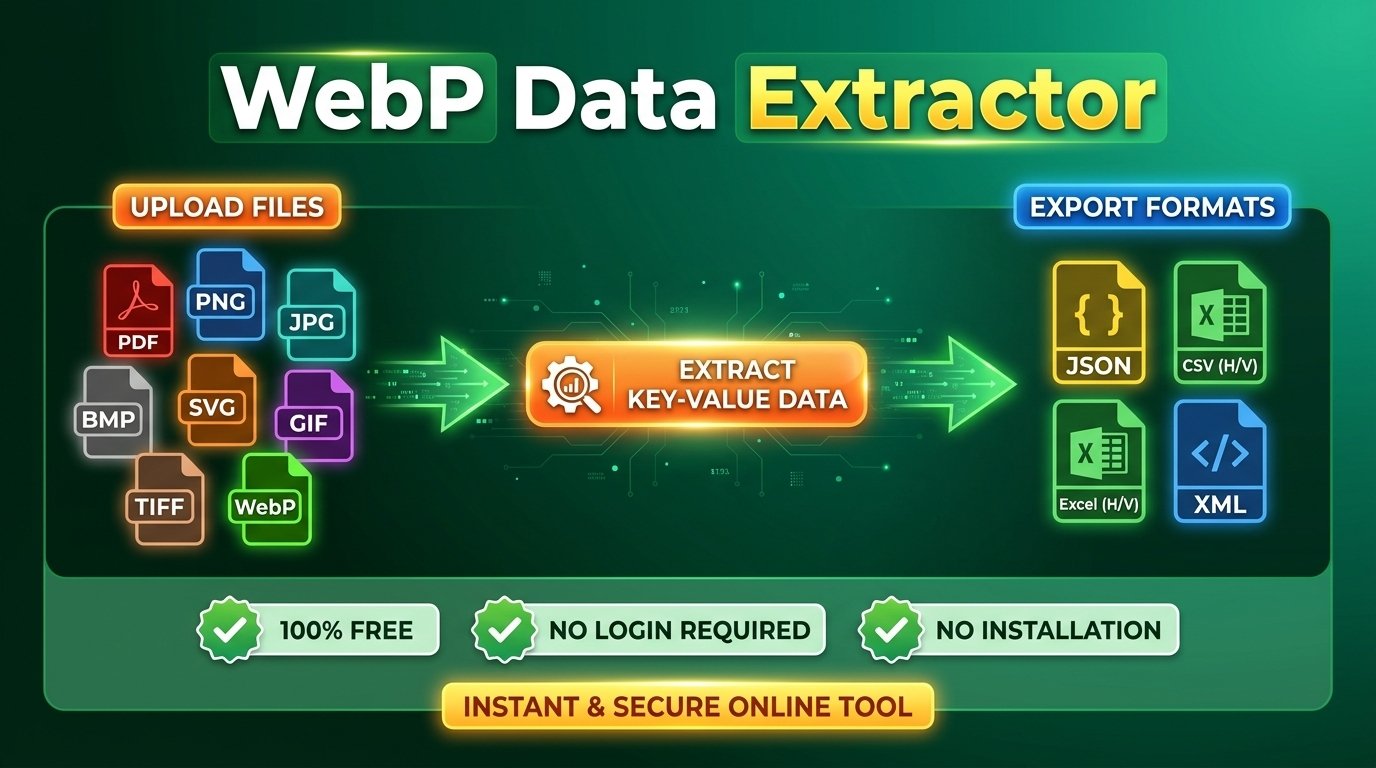
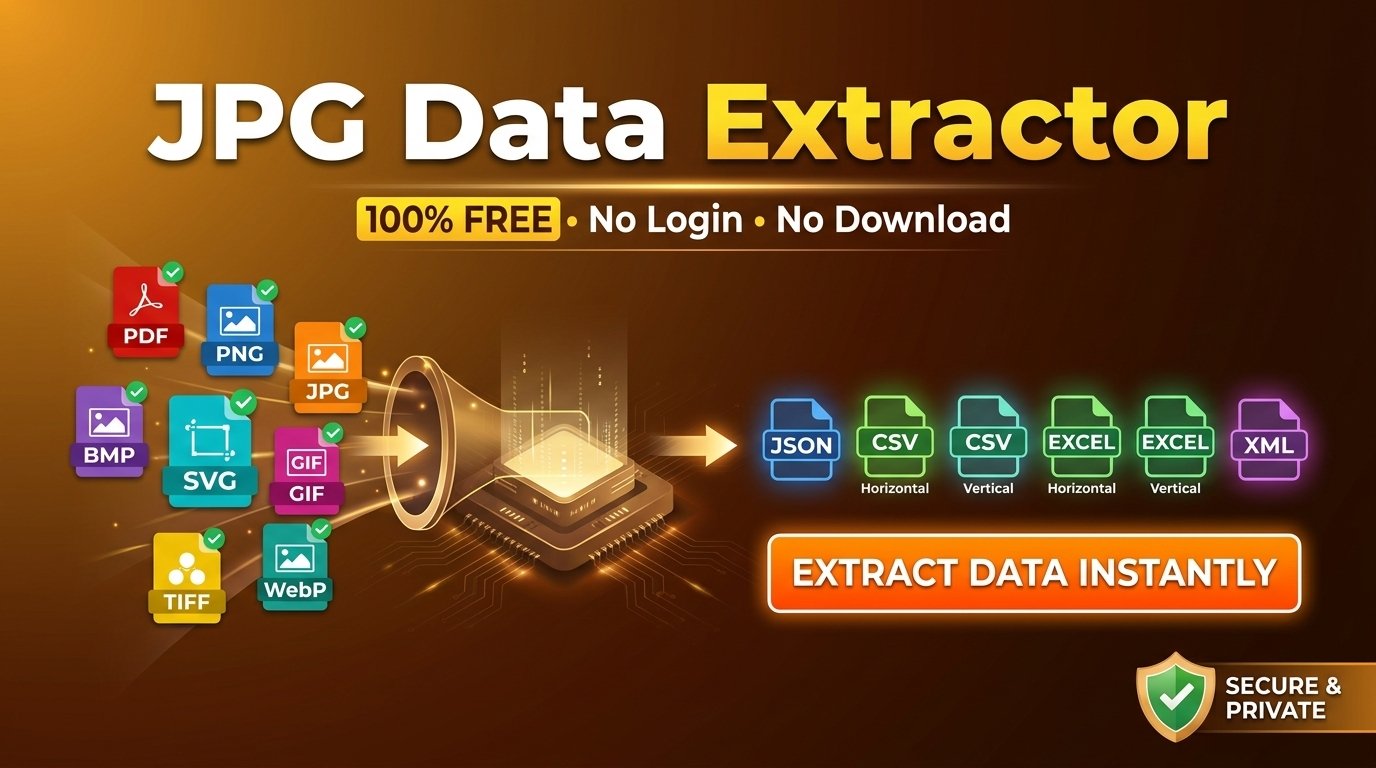
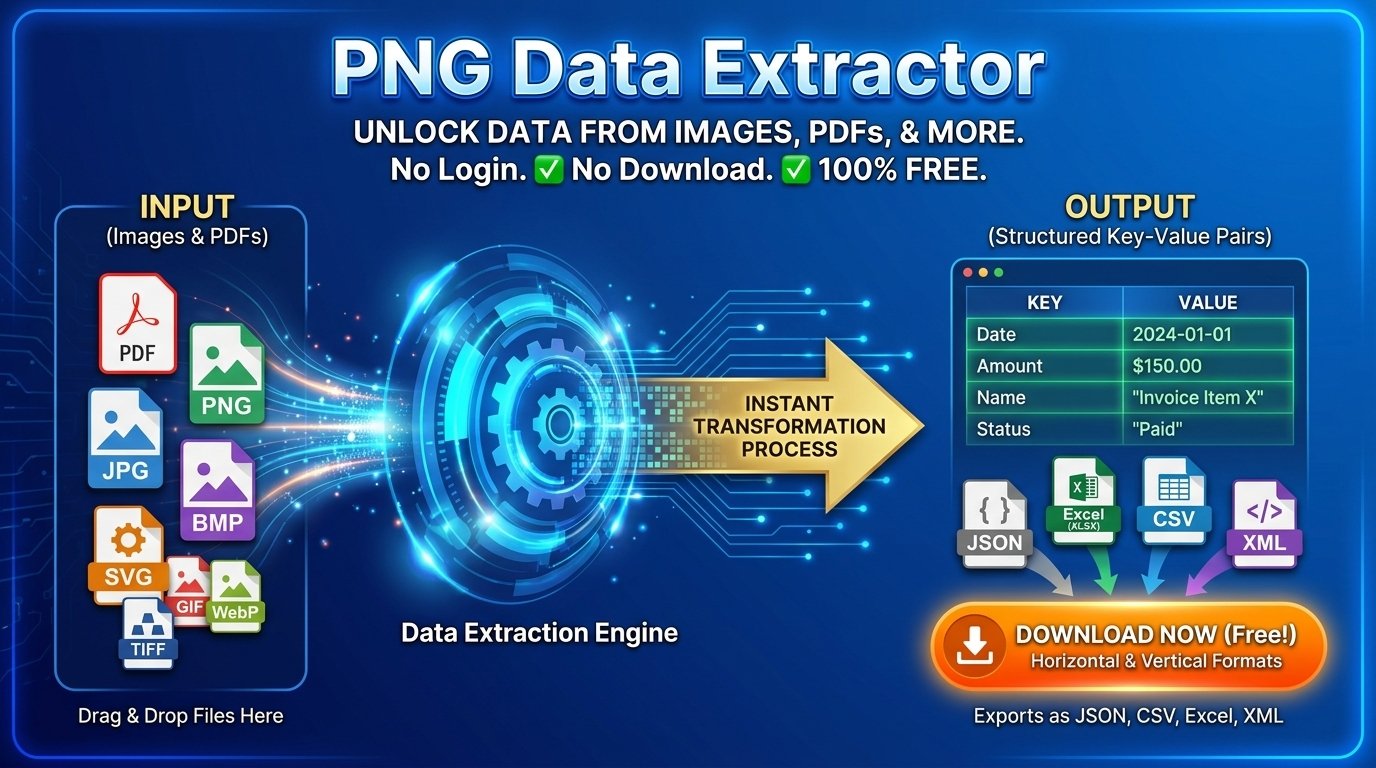
Turn a scanned or multi-page TIFF into clean key-value data in seconds — archived records, faxed forms, IDs, medical and lab reports, insurance claims, and applications. Open the exact page you need (the tool reads one page at a time), let AI pair every label with its value, or define your own fields to lock the same schema across documents. Export to JSON, CSV (horizontal or vertical), Excel, or XML. Free, no signup, no install, 20 languages. PNG, JPG, PDF, WebP, GIF, BMP, and SVG welcome too.

No Signup
Secure & Private
Lightning Fast
PNG JPG PDF TIFF SVG WebP GIF BMP

Drag & Drop Your TIFF

or click to browse

TIFF, PNG, JPG, WebP, GIF, BMP, SVG, PDF

Max 50 MB

Powerful Features for TIFF Extraction

Tools to read a scanned TIFF page, clean up what comes back, and export it in the shape your systems expect.

Multi-Page & Page-Precise Extraction

A single TIFF can bundle an entire scanned file — dozens of pages in one container. Flip to the page that matters in the preview and the extractor works on just that page, keeping output tidy and repeatable even across a long archived document.

AI Field-and-Value Detection

Hand the selected page to the AI and it maps every printed label to the value beside it — form entries, record fields, totals, ID lines — with no template to build. Faint Group 4 fax pages, grayscale scans, and full-color captures are all fair game.

Define Your Own Fields

Processing the same record sheet over and over? Spell out the keys you care about — Patient ID, Claim No., Date of Service, Account Number — attach a short description to each for sharper matches, and every page you run comes back in that exact shape.

Page-by-Page Preview

Scroll through a multi-page TIFF and settle on the right page before you commit. The preview is the source of truth — the page on screen is the page the extractor reads — so nothing is pulled from the wrong sheet of a bundled scan.

Edit Results & Save a Template

Extracted fields land in a table you can change: overwrite a character the scanner garbled, rename a key, slot in a value the AI skipped, or drop a row entirely. Happy with the layout? Save it as a result template and reuse it on the next file.

Export to Any Format

Send the data out as JSON for code and APIs, CSV in horizontal or vertical layout for spreadsheets, Excel (.xlsx) either way for analysts, or XML to feed archival and document-management systems.

How It Works

Three steps take a scanned TIFF page from image to structured, exportable data — one page per run, nothing to install or configure.

1

Upload & Select Your Page

Drop your TIFF onto the page or pick it from your device. If it holds several scanned pages, jump to the one you want with the Prev/Next buttons, the page box, or the dropdown — the preview shows precisely what will be read.

2

Auto-Detect or Define Your Fields

Let Automatic mode find and pair every label and value on the page for you, or switch to Manual and name the fields you expect (Patient ID, Claim No., Date of Service). Answer the short security check and extraction begins.

3

Review, Edit & Export

Your data appears in an editable grid — tidy up any value, add anything missing — then save it as JSON, XML, CSV (horizontal or vertical), or Excel (horizontal or vertical). Pick the next page and run it again for the rest of the document.

Use Cases for TIFF Data Extraction

TIFF is the format of record for scanned archives, faxes, and document-management systems — see how teams turn those labeled pages into clean, structured key-value data.

Scanned & Archived Multi-Page Records

Pull record IDs, reference numbers, dates, and party names from multi-page TIFF archives stored in document- and records-management systems — one page at a time, without unpacking the whole file.

Faxed Forms & Documents

Capture sender, fax date, reference number, and form fields from Group 3/Group 4 fax TIFFs still common in healthcare, legal, and logistics intake — turning received faxes into structured records.

Government & Legal Records

Extract case and file numbers, filing dates, names, and addresses from scanned court filings, deeds, certificates, and official records that public agencies routinely archive as TIFF.

Clinical Records & Lab Reports

Capture patient name, MRN, test or exam name, result values, units, reference ranges, and report dates from scanned clinical records, lab results, and radiology report sheets.

Passport & ID Scans

Pull document number, full name, date of birth, issue and expiry dates, and address from high-resolution TIFF scans of passports, national IDs, and driver licenses.

Insurance Claims & Policy Documents

Lift claim number, member ID, policy number, coverage limits, dates of service, and settlement amounts from archived claim forms and policy documents kept as TIFF.

Invoices, Receipts & Statements

Read invoice and account numbers, line items, subtotals, taxes, totals, and dates from scanned and archived accounting TIFFs — ready for bookkeeping and reconciliation.

Application & Intake Forms

Convert applicant details, employment or education history, consent checkboxes, and signature dates from scanned loan, visa, job, and clinic intake forms into structured records.

Frequently Asked Questions

Got questions? We've got answers.

Does the tool support multi-page TIFF files?

It does. Step through the pages in the preview with Prev/Next, the page-number box, or the dropdown, pick one, and only that page is extracted. Run it, move to the next page, and repeat. To pull an entire document automatically, see the batch and all-page options further down.

Which details can it lift from a scanned TIFF page?

Whatever is legible on the page becomes a key-value pair — form labels and entries, reference and serial numbers, dates, names, addresses, totals, and other printed text — packaged for export as JSON, CSV, Excel, or XML.

Will it read faxes and black-and-white (bitonal) scans?

Yes. Faxes and archival scans are where TIFF earns its keep, and the engine copes with bitonal Group 3/Group 4 pages as readily as grayscale or full-color ones. The crisper the page, the cleaner the result.

How do I tell it which page to read?

Browse to the page in the preview and leave it on screen — that displayed page is the one the extractor processes. It lets you isolate a single sheet inside a long scanned bundle without ever splitting the file.

Is there a way to process every page of a big TIFF in one go?

Online, extraction runs a page at a time on purpose, which keeps long archives accurate. When you need a whole multi-page document — or many files — done in one sweep, reach out about batch and all-page processing.

What happens in automatic mode?

The AI studies the page's text and layout and links each label to its value with zero configuration on your part — no field maps, no templates. It's the quickest route for a one-time or unfamiliar scan.

And when does defining my own fields make more sense?

Reach for manual mode on documents you handle again and again — a standard intake sheet, a recurring claim, a fixed record layout. Naming the keys yourself (and adding an optional hint to each) guarantees the same fields, in the same order, every time.

Can my field set be stored and applied to other files?

Absolutely. Build your keys in manual mode, export them as a JSON or CSV template, and load that template the next time a matching TIFF comes through to recreate the same fields instantly. You can also download the current fields whenever you want to back them up.

Am I able to correct the results before saving them?

Every extracted row is editable — patch a character the scan mangled, relabel a key, insert a value that slipped past the AI, or remove a line you don't want. Whatever you confirm is exactly what lands in the downloaded file.

Which download formats are offered, and when would I use each?

Reach for JSON in code and pipelines; CSV horizontally (a row per document) for roll-ups or vertically (key and value per row) for close reading; Excel .xlsx in either layout for analysts; and XML when an archive or document-management system expects it.

TIFFs can be huge — is there an upload limit?

Because TIFF keeps pages lossless and high-resolution, scanned bundles add up fast. Each file can be up to 50 MB; if yours is bigger, pull only the pages you need or split it first, and talk to us about scaling when volume is constant.

How much does scan quality matter?

Quite a bit. A straight, evenly lit page scanned at roughly 300 DPI reads far better than a pale, tilted, or low-resolution one. Either way, the editable results table lets you fix anything before export.

Besides TIFF, what else can I upload?

The same workflow also accepts PNG, JPG, PDF, WebP, GIF, BMP, and SVG — handy when a document turns up as a phone snapshot, a born-digital PDF, or a single-frame image instead of a TIFF.

How is my uploaded TIFF handled, privacy-wise?

Files are used only to fulfill your extraction and are not kept, logged, or passed on afterwards. Regulated teams in healthcare, finance, legal, or government can ask about a local or on-premises setup so archives never leave their own network.

Is it genuinely free, and can I use it in my language?

On both fronts, yes — extraction costs nothing, with no account, card, install, or extension required, and the interface is offered in 20 languages so your whole team can work comfortably.

UNLOCK MORE

Ready to Scale?

Extracting one TIFF page at a time is just the start. Automate it, sweep whole multi-page archives in a single run, or get enterprise access to handle TIFF data extraction at any volume.

Run Locally

Automate on Your Machine

Run the TIFF extractor on your own hardware — no browser, no queue, no limits — and clear every page of an archive in one pass. Built for developers slotting TIFF extraction into local pipelines, and for records that can't leave the network.

Contact Us
High Volume

Process TIFF Files in Bulk

Extract from hundreds of TIFF files at once, on the web or on your own hardware. Stop feeding the tool one scan at a time and let a whole archive run unattended.

Contact Us
B2B / B2C

Enterprise Access

Drop the CAPTCHA, switch on API access, and plug TIFF data extraction straight into your records-management, claims, or archival systems. Sized for teams at any scale.

Get in Touch

Have a different use case? Tell us about it →